
Manual lymphatic drainage: who it helps, how it works and when to avoid it
Swollen legs after a long day at work, swelling after an injury or surgery, that heavy-legs feeling – these are the most common reasons people look for manual lymphatic drainage. Here is what it is, who it helps, what a session looks like and when it should not be done.
What the lymphatic system does
The lymphatic system is a network of vessels and lymph nodes that carries lymph. It drains excess fluid, waste products and cell debris from the tissues and plays a part in your immune defence. Unlike blood, lymph has no pump of its own – it moves mainly thanks to muscle work, breathing and movement. When you move too little, or when tissue is overloaded after an injury or surgery, fluid builds up and swelling appears.
What manual lymphatic drainage is
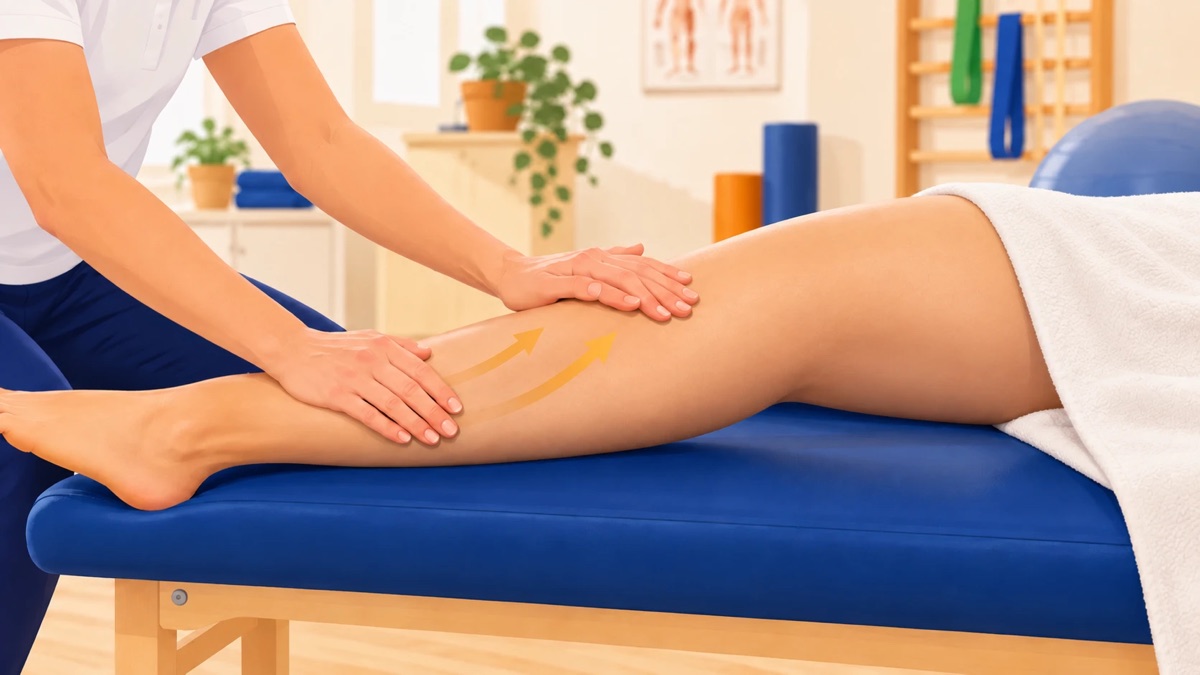
Manual lymphatic drainage is a special, very gentle hands-on technique. The therapist first opens up the main lymph nodes (in the neck, armpits and groin) and then uses slow, rhythmic strokes to move lymph in the direction of its natural flow. It is not a classic massage – the pressure is very light and the treatment is pleasant and painless.
Who it helps
- swelling after injuries – sprains, bruises, haematomas,
- swelling after surgery – for example after orthopaedic or cosmetic procedures (always in agreement with your doctor),
- heavy, swollen legs after long periods of standing or sitting,
- recovery after heavy physical exertion,
- skin quality – lymphatic drainage can improve the look of the skin and help with cellulite.
What a session looks like
We start with a short chat about why you have come and ask about your health – because of contraindications (see below). The treatment is done lying down and always starts at the neck, even if the swelling is in your leg. Only once the lymph nodes are released do we move to the treated area.
On the day of your session:
- drink plenty of water,
- avoid alcohol, coffee and fatty food after the treatment,
- expect to urinate more often afterwards – that is normal.
How many sessions you need
It depends on the reason. For swelling after an injury, drainage is repeated until the swelling or bruise has gone. For swollen legs or general recovery, a course of 8–10 sessions works well – ideally twice a week at first, then less often. One session helps, but a course brings a clearer and longer-lasting effect.
When to avoid it
Manual lymphatic drainage is not suitable if you have:
- an acute viral or bacterial infection or a fever,
- swelling caused by heart, kidney or liver disease,
- active cancer,
- acute vein inflammation or suspected thrombosis,
- open wounds or an acute skin condition in the treated area.
If you are not sure whether lymphatic drainage is right for you, ask your doctor or get in touch with us beforehand.
Important: sudden swelling of one calf with pain, redness or warm skin may be a sign of thrombosis. Do not book a massage – see a doctor as soon as possible.
Frequently asked questions
Does manual lymphatic drainage hurt? No. The strokes are very gentle and most clients find the treatment pleasant and relaxing.
How long does a session take? Usually 30–60 minutes depending on the area treated. Current prices are in our price list.
Can I have lymphatic drainage during pregnancy? Gentle drainage is often possible in pregnancy, but always after consulting your gynaecologist. Please tell us about your pregnancy in advance.
Is it the same as machine lymphatic drainage? No. Machine drainage uses pressure cuffs. Manual drainage is done by hand, can be adapted to a specific area and always starts by releasing the lymph nodes.
Find out more on our Lymphatic drainage page.
This article is for general information only and does not replace a medical examination or an individual consultation with a physiotherapist.