
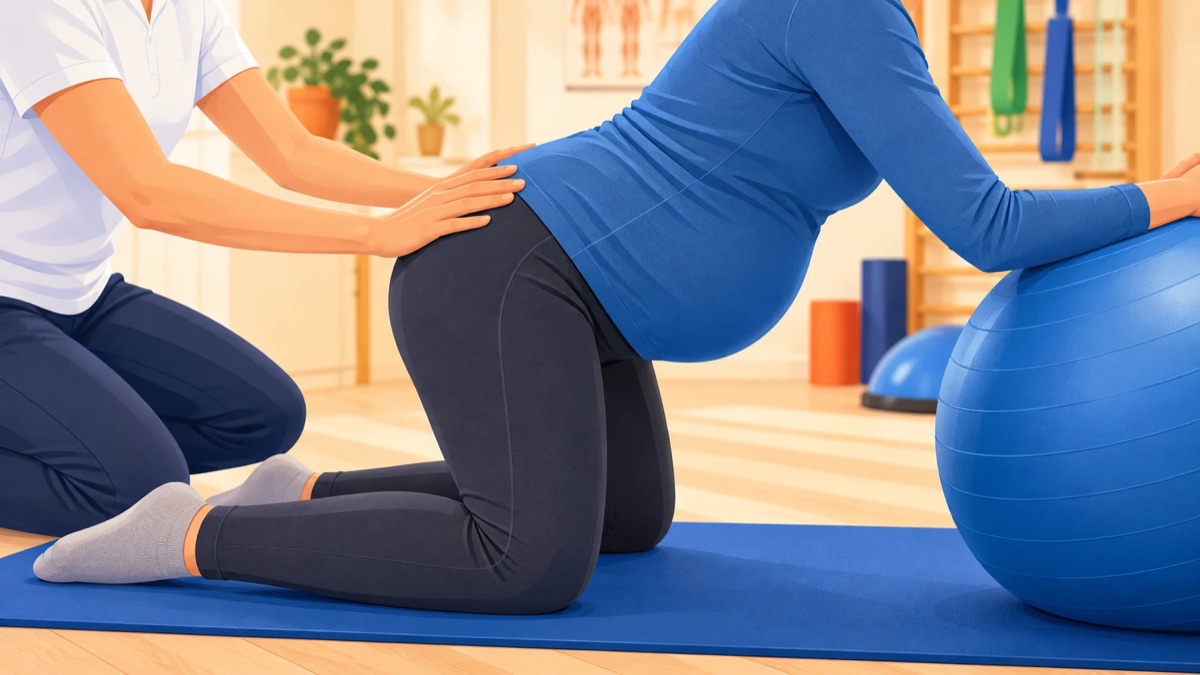
Physiotherapy during pregnancy and after birth
Pregnancy and birth are a huge change for the body. Your centre of gravity, posture, spinal load and pelvic floor all change. Back pain, pelvic pain or pelvic floor problems are common – but they are not something you just have to put up with. Physiotherapy helps during pregnancy and after birth.
Physiotherapy during pregnancy
As the bump grows, your centre of gravity shifts and the curve in your lower back increases. The hormone relaxin also loosens ligaments to prepare the pelvis for birth. That is why pregnancy often brings:
- lower back pain,
- pelvic and pubic symphysis pain – typically when walking, standing on one leg or turning over in bed,
- upper back and rib pain later in pregnancy,
- swollen legs.
A physiotherapist can help with relieving techniques, advise on positions for sleep and everyday activities and put together safe exercises – for breathing, relaxation and strength.
During pregnancy, always: tell us that you are pregnant and how the pregnancy is going. Some methods are not used in pregnancy – for example Rebox electrotherapy. In a high-risk pregnancy, discuss any therapy and exercise with your gynaecologist.
Physiotherapy after birth
After birth the body gradually returns to its original state, but not always on its own and without problems. When to start?
- gentle breathing and pelvic floor activation are usually recommended in the first days after birth,
- a physiotherapy visit usually follows the six-week check with your gynaecologist (after a caesarean section, as your doctor advises).
Abdominal separation (diastasis recti)
Diastasis recti is a gap between the straight abdominal muscles along the midline. It is natural in pregnancy, but in some women it does not close on its own after birth. It shows as a bulge along the middle of the belly when getting up from lying down, a weak core and sometimes back pain.
With diastasis, it is important not to jump straight into classic sit-ups and crunches, which can make the gap worse. A physiotherapist will measure the gap and teach you how to activate your deep stabilising system and exercises that gradually strengthen your core.
Pelvic floor
A weak pelvic floor can show as leaking urine when you cough, sneeze or run, a feeling of pressure in the pelvis or pain. These problems are common after birth, but they are not normal, and pelvic floor exercise guided by a physiotherapist is effective.
What therapy involves
At the first visit we talk through your pregnancy, birth and current problems, and examine your posture, breathing, pelvis and abdominal wall. Then we put together a plan – relieving techniques, home exercises and a gradual return to sport.
In our clinic we also work with the Ludmila Mojžíšová method, which focuses on the pelvis and women’s health.
Returning to sport after birth
Add running, jumping and abdominal strength work only once your pelvic floor and core function have recovered – usually no earlier than 3 months after birth, sometimes later. If you feel pressure in your pelvis or leak urine during sport, that is a signal to slow down and talk to a physiotherapist.
See a doctor immediately if you have bleeding, severe abdominal pain, a fever, sudden swelling and pain in one leg, or any warning signs during pregnancy.
Frequently asked questions
Can I bring my baby to physiotherapy? Please let us know in advance and we will gladly find a solution.
Is it too late to deal with diastasis or the pelvic floor years after birth? No. Exercise helps even years later.
Can lymphatic drainage help with swollen legs in pregnancy? Gentle manual lymphatic drainage is often possible, always after consulting your gynaecologist.
More about our work is on the Physiotherapy page.
This article is for general information only and does not replace a medical examination or an individual consultation with a physiotherapist.